Showing posts with label Language documentation and revitalization. Show all posts

November 16, 2024

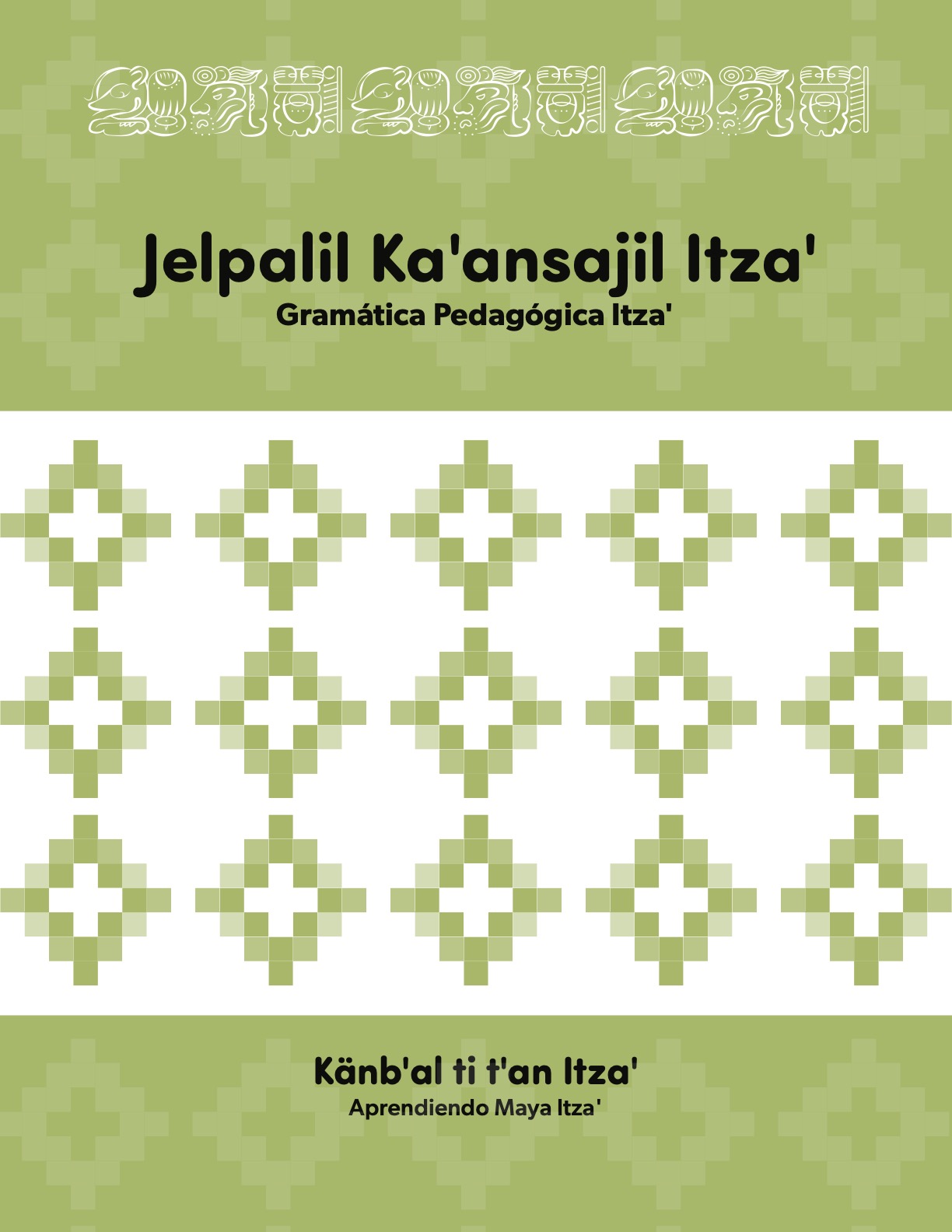
Pedro Mateo Pedro Publishes The Itza' Pedagogical Grammar

The department is pleased to congratulate Pedro Mateo Pedro (faculty) on the publication of the Itza' Pedagogical Grammar, in collaboration with the Comindad Lingüística Itza' of the Academia de las Lenguas Mayas de Guatemala.


Itza’ is an endangered language spoken in Guatemala that belongs to the Yucatecan branch of Mayan languages. 80% of the pedagogical grammar appears only in Itza’, since the aim is to strengthen the understanding and oral expression of the language. The development of the grammar is part of a larger project on the revitalization of Itza’. 

This project was a joint effort with individuals in the language community and at UofT: Jorge Francisco Mex Tesucún (Comunidad Lingüística Itza'), Ana López Sipac (Kaqchikel speaker), Aki Zhang, Sooyoun Im, David Ramsay, Jevan Konyar, and Daniela Lopez Loncar (UofT).  

This is a great step towards revitalization and documentation. Congratulations everyone! 


The book is available here: 

Itza' Pedagogical Grammar

September 2, 2024

Linguistics Coffeehouse Recap!

During March of 2024, Jack Mahlmann, Claudia Raihert, and Mechelle Wu, graduate students of our department, organized a coffeehouse fundraising event. 

Raising over $1400 for Onkwawenna Kentyohkwa, Mahlmann, Raihert, and Wu wanted to bring this event to the attention of the wider UofT Linguistics community to surpass that amount next year. 

A community organization on the territory of the Six Nations of the Grand River, Onkwawenna Kentyohkwa works as a school to support the vitality of Kanien'kéha, a Mohawk language. Earlier in May, this blog covered WSCLA, at which several speakers gave presentation concerning the revitalization of this language. 

For all those interested in supporting the goal of revitalizing the Mohawk language at Grand River, feel free to visit their Donate page, or look out for more events such as these next year. 

Congratulations to this trio and all those who donated!

July 23, 2024

Naomi Nagy, Linguistics Chair, Publishes Book about Heritage Language Variation and Change!

book cover
On June 27th, 2024, Department of Linguistics Chair, Naomi Nagy, published her book, Heritage Languages: Extending variationist approaches. [Click link to purchase :-) or get it from UofT's library]. 

In Canada, the term, "heritage language" refers to a language learned in the home by children, if that language is not one of Canada's official languages (French, English). Half the people in Toronto are heritage-language speakers!

This book seeks to dispel stigma surrounding the use of one's heritage language by investigating cross-generational variation and change in conversations with 400+ speakers, in 8 different heritage languages, in Toronto. The findings reveal many similarities between heritage and homeland varieties.

"Introduc[ing] new methodology to help readers understand and apply variationist sociolinguistic approaches to quantitatively analyze spontaneous speech," this novel approach to heritage language research showcases how change in grammar of heritage languages resembles change patterns seen hegemonic, majority languages, contradicting findings of "simplification/attrition patterns in experimental heritage language studies." [quoted from the publicity blurbs]

Comparing patterns not only across languages, but across generations, this research quotes heritage speakers to give voice and pride to the use of their languages. 

Nagy presented some of this research at BAM's Language Research Day, as her talk on Heritage Language Variation and Change (HLVC), which we covered on the blog earlier in July. Other findings are on the project's webpage.

This book promises to be a veritable toolbox for those interested in learning about or researching heritage languages, dedicated to language revitalization.

Currently, the Department Chair is in Italy conducting research also relevant to this pursuit - about the variation in Franco-Provencal language varieties over time and space, and how to connect speakers of different varieties via social media.


The author reports that this book was much more fun to write than her dissertation!

July 15, 2024

Arcadian Greek vs. Standard Greek: Dr. Photini Coutsougera Publishes A Dictionary with the Answers


From Dr. Coutsougera: 

"""
Dr. Photini Coutsougera of Mississauga Campus' Language Studies Department has recently published a new book, A Dictionary of Northeastern Arcadian Greek [in Greek] with Patakis Publications, Athens, Greece (2024)/ 320 pages. 

A Look Inside: Letter Αα, p. 66

The Dictionary of Northeastern Arcadian Greek comprises 4.200 entries and 5.120 senses. These entries were primarily collected during field work, over a period of approximately thirteen years, and from existing written sources. 

Subsequently, they were verified one by one  by a group of native speakers of the dialect, aged 80 and over. Each entry contains semantic, phonological, morphological, syntactic and stylistic information. It also contains a plethora of authentic examples in use, synonyms, antonyms, idioms and idiomatic phrases, proverbs, sayings, and verses from local folk poetry. Finally, a 28-page Prologue includes a compact grammar of the dialect, lays out the research methodology employed in the data collection, and defines Arcadian Greek on the basis of linguistic criteria which systematically differentiate it from Standard Greek. 

This book aspires to bring the Peloponnesian varieties of Greek to the fore as they have been conspicuously absent from the literature.

                                                                 """


July 11, 2024

Language Research Day - BAM!

On Monday, June 3rd, the University of Toronto hosted Language Research Day (LRD), a student-led academic conference designed to facilitate interaction and learning among graduate students in the field of language research. 

Spanning campuses, languages, and levels of inquiry, this hybrid conference hosted over 100 in-person and virtual attendees.

Professor and Linguistics Department Chair Naomi Nagy gave the opening keynote, (Heritage) Russian case-marking: Variation and paths of change.

Dr. Craig Chambers, a joint PhD in Cognitive Science and Linguistics, gave the closing keynote, Where and how does nonlinguistic cognition fit into language abilities? This presentation was drawn from a cross-sectional study on real-time language processing, and aids in the complete understanding of the "mental architecture supporting language abilities across the human lifespan."

One other Linguistics Dept member presented: PhD student Nick Haggarty, who was featured in June's spotlight on Queer Linguistics.

Other University of Toronto departments in attendance included Speech Language Pathology, Psychology, and Near & Middle Eastern Civilizations, making up a participation as diverse as the languages discussed at the conference. 

The Linguistics Department, in part responsible for funding the event, was also represented by Pedro Mateo Pedro, as well as Angelika Kiss, who helped organize, and recently defended her PhD thesis (to be covered on the blog soon)!

To see more information, check out BAM's Instagram page or the #LRD2024.

We look forward to seeing the development of this exciting event in 2025!


June 25, 2024

Tahohtharátye Joe Brant Completes Dissertation at the University of Victoria

Congratulations Tahohtharátye Joe Brant!

He has earned a PhD from the University of Victoria, completing his dissertation, Tó: nya'teká:yen tsi Entewà:ronke', in Language Revitalization and Change, available at the University of Victoria website

Tahohtharátye is cross-appointed in the Centre for Indigenous Studies, and we are proud to have him on our faculty.

Learn more about him here, and read about his work at WSCLAon the WHITL blog.

Congratulations once more!

June 21, 2024

Elaine Gold Receives the Governor General's Meritorious Service Award

Director Elaine Gold at Glendon Hall
Elaine Gold, retired from the Linguistics Department, and head of the Canadian Language Museum (CLM) has been awarded the Governor-General's Meritorious Service Award. Congratulations!!

The co-Chair of the International Network of Language Museums has seen her museum's exhibits touring across the world, including and especially those pertaining to Indigenous languages. 

Director Gold's star-studded career since retirement from our Department includes speaking about Canadian Indigenous Language policies at the Austronesian Languages Revitalization Forum in Taipei, September 2023.

She and the CLM are now collaborating with the Indigenous Languages Research Foundation to translate their booklet, Indigenous Languages in Canada, into Mandarin. 

The CLM also hosted the art exhibit Anthem: Expressions of Canadian Identity during the fall, which will be presented from May to September at the Canadian Embassy's Prince Takamado Gallery in Tokyo. On June 20th, she, her team, and four artists, will attend the exhibition's reception. 

Director Gold giving her presentation in Taipei, September 2023.

Currently on display in the CLM is "Toronto Voices," an exhibit created as part of community outreach, exploring and detailing the identity of young Torontonians through their vocabulary in collaboration with The Spot, a drop-in center in the Jane-Finch area. 

This recognition of Gold's tireless devotion to languages of Canada, and especially of Toronto, is a fantastic credit to her work in both national and international linguistic communities.

We are so inspired by Gold's impact on reconciliation and language revitalization, especially in the field of Indigenous languages and cultures.


June 12, 2024

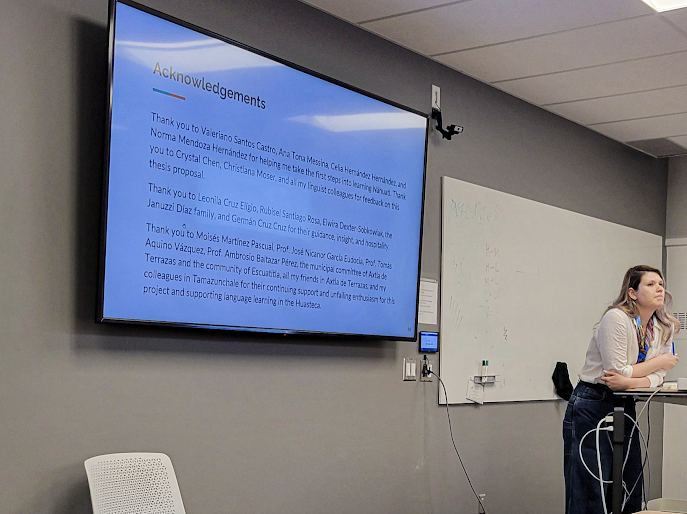
Nadia Takhtaganova successfully defends her PhD Thesis Proposal!

On May 14th, 2024 PhD student Nadia Takhtaganova successfully defended her thesis proposal, Mapping Spatial Expressions in Huasteca Nahuatl.

Working on language documentation in Latin America, Takhtaganova is currently studying the interaction of relational nouns and case marking in Nahuatl, an Uto-Aztecan language spoken in Eastern Mexico. Incorporating historical and generative linguistic frameworks with her thesis, she aims to train community members in linguistic research methodology to "raise metalinguistic awareness" and reduce stigmatization of language change.

We highly recommend speaking to Nadia about this exciting work, a "morphosyntactic snapshot of typological change in spatial expressions in Huasteca Nahuatl."

Her thesis proposal committee, consisting of Pedro Mateo Pedro and Michelle Troberg, as well as Nadia’s supervisor, María Cristina Cuervo, are excited to see where she goes next, and to see the successful completion and defense of her PhD thesis. 

We at the Linguistics Department are so proud of Nadia for all her hard work! Congratulations!


June 4, 2024

UofT Linguists at the 55th Annual Conference on African Linguistics

Several members of our UofT community presented talks at the 55th Annual Conference on African Linguistics hosted by McGill University, between May 2nd and May 4th

A complete list of UofT attendees and presenters can be found below. 

Liam McFadden, Assistant Professor Samuel Akinbo, PhD Candidate Gregory Antono, Yi-Ting Deng, and Assistant Professor Avery Ozburn presented their work, Mapping African languages

His first conference outside of UofT, McFadden is an undergraduate student at UofT, who got to combine his knowledge of linguistics and GIS (Geographic Information System) to navigate through the field of language mapping with the goal of engaging the linguistics community in a project of making better maps

McFadden and the team are excited to see the development of their work in future years, and we at the WHITL are excited to see ACAL 56!

UofT Linguistics Department Presence: 

Speakers: 

Laura Griffin, Alexander Angsongna - An Analysis of Tone Delinking in Future Contexts in Central Dàgáárè

Liam McFadden, Samuel Akinbo, Gregory Antono, Yi-Ting Deng, Avery Ozburn - Mapping African languages

Keffyalew Gebregziabher - Polar and Wh-questions in Tigrinya 

Samuel Akinbo, Tongpan Rabo Fwangwar - Grammatical tones in the Derivation of Verbs from Ideophones in Mwaghavul

Atiqa Hachimi, Gareth Smail - Stylized performance of “mock Berber” in a Moroccan Stand-Up comedy talent show

Juvénal Ndayiragije, Patrick Kinchsular - A comparative analysis of transitive expletive constructions in Kirundi and Germanic

Poster:

Avery Ozburn, Gregory Antono, Saba Mirabolghasemi - Community- and context-based approaches to African linguistics: the Language Profiles Project

May 31, 2024

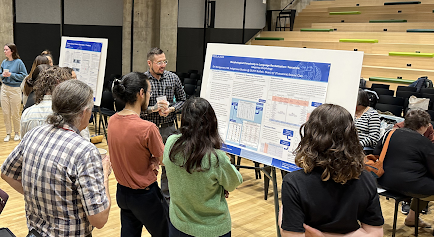
UofT Hosts WSCLA - The Workshop on Structure and Constituency in Languages of the Americas


Members of the WSCLA organizing committee at the Saturday dinner. L to R: Martin Renard, Jack Mahlmann, Greg Antono, Pedro Mateo Pedro, Susana Béjar, Yanfei Lu, Laura Griffin. We are missing Keren Rice. 

Between April 26th and 28th, the University of Toronto’s Linguistics Department and the Centre for Indigenous Studies were proud to host WSCLA - the Workshop on Structure and Constituency in Languages of the Americas.

Dedicated to the “formal and theoretically-informed linguistic study of the Indigenous languages of North, Central, and South America,” the event included speakers from Montreal, Alberta, Buffalo, Minnesota, and even Copenhagen. Invited speakers from UofT included Oheróhskon Ryan DeCaire, Associate Professor, while panelists saw a presentation from Tahohtharátye Joe Brant, Assistant professor. Looking forward to WSCLA 2025!


Talks

The Acquisiton of Ideophones and Split Ergatvity in Chuj
Pedro Mateo Pedro (Faculty)

Adult Immersion in Kanien’kéha Revitalizaton 
Oheróhskon Ryan DeCaire (Wáhta and UofT Faculty)

Posters

Low “From” Applicatves in Kanien’kéha
Martn Renard (PhD)

Language Contact and the Extended PP Projection: Huasteca Nahuatl Spatial Expressions 
Nadia Takhtaganova (PhD)

Language Revitalizaton, is it only Indigenous Speakers’ Responsibility?
Pedro Mateo Pedro (Faculty), Nathalia Ortz Rios (BA), Daniela Lopez Loncar (BA), Jorge Francisco Mex Tesucun, Otoniel Rosendo Zacal Chayax, and José Alfredo Chayax Tesucun (Comunidad Lingüistca Itzaj)

Special Session Panel: The Future of Kanien’kéha Revitalization

Panelists from the Sunday special session on the Future of Kanien'kéha Revitalization: 

Tahohtharátye Joe Brant (TTO and UofT), Rohahiyo Jordan Brant (Onkwawenna Kentyohkwa), Oheróhskon Ryan DeCaire (Wáhta Mohawks and UofT), Tehota’kerá:ton Jeremy Green (TTO and York University), Konwanonhsiyóhstha’ Callie Hill (Tsi Tyónnheht Onkwawén:na), Owennatekha Brian Maracle (Onkwawenna Kentyohkwa), Karonhiióhstha’ Shea Sky

(Ionkwahronkha’onhátie and Kanien’kehá:ka Onkwawén:na Raotitióhkwa).


Other presentations involving UofT alumni:

Apparent Cross-Clausal Agreement with Obliques in Kalaallisut is Prolepsis
Line Mikkelsen (Berkeley), Emily Clem (UCSD), Michelle Yuan (MA 2013, now Faculty at UCLA), Ellen Thrane

(Mis)matches Between Speech and Gesture in Hul’q’umi’num’ Storytelling
Rosemary Webb (BA 2019; now PhD student at UVic)

A Source of Conatvity in Tlingit Pluractonal Verbs
Laurestine Bradford (MA 2021, now PhD student at McGill)

Voice, Valence, and Hul’q’umi’num’ Salish Switch-Functon Serial Verb Constructons
Lauren Schneider (SFU) and Rosemary Webb (BA 2019; now PhD student at UVic)


Elder Eileen Antone giving the opening special session on Sunday, Iwith. 


Sunday Morning Poster session.


Mskwaankwad Rice (University of Minnesota) giving the presentation on a Learner-Centered Approach to Linguistic Research, one of 6 invited talks.


March 12, 2024

2024 IGNITE grant recipients

 Congratulations to Samuel Akinbo and Suzi Lima! 

They got a 2024 IGNITE grant which supports "interdisciplinary research led by Black faculty, librarians, post-doctoral scholars, clinical scientists and medical research fellows/residents at the University of Toronto." These funds will help support their "project to document the preparation of traditional foods and investigate the grammar of counting and measuring in Gã and Yoruba, two closely related languages spoken in Ghana and Nigeria, respectively. Collaborating with universities in Ghana and Nigeria, one of the project’s key goals is to preserve and revitalize stigmatized traditional foods."

See great photos and more about other winners here:
https://brn.utoronto.ca/announcing-the-2024-brn-ignite-grant-recipients/

October 10, 2023

NWAV51 in NYC!

U of T linguists have a strong presence at 

NWAV51 (New Ways of Analyzing Variation), 

North America's premier sociolinguistics conference, this year!


Beekhuizen, Woolford: Intensifiers never go out of style: quantifying style and its effects on lexical variation

Franco, Tagliamonte: Getting socialized: Variation and change in the passive in Canada

Hachimi, Small: Stylized performance of prepositions: a potential innovation in comedy talent show (withdrawn)

Kang, Gao, Yun, Ryu: An apparent-time study of Daejeon Korean stop laryngeal contrasts

Kang, Yun, Ryu: VOT merger in progress and speech rate accommodation in perception: a case study of Daejeon Korean  

Sali Tagliamonte: The ‘1984’ of linguistic change: A sociolinguistic shock point in the late 20th century.

Kaleigh Woolford: Taking center stage: Measuring variation and change across the center and periphery of lexical fields  

Mechelle Wu: The floating bubble: Linguistic innovations of the highly mobile Third-Culture Kids (TCKs)


And from the HLVC Project: 

Griffin, L. /o/! They’re j/u/st about the same!:  

  Vowel Shift in Heritage and Homeland Seoul Korean

Leung, J. Setting {straight} the record {straight}: Acceptability of alternative word orders in resultatives by heritage Cantonese speakers

Nagy, N. Extending variationist approaches to more languages: Problems & Possibilities

Petrosov, Nagy. (Heritage) Russian case-marking: Variation and paths of change

Tse, H. AM/P~OM/P merger in Hong Kong vs. Toronto Cantonese: An under-documented homeland sound change in a heritage language context

Umbal, P. Stability in the face of contact: Evidence from Heritage Tagalog /u/


Prior department members:  

Carrier, J.: Split ergativity and loss of rich verbal agreement 

Muthukumarasamy and Narayan: Exploring variation in heritage Tamil retroflex perception and production 

Neuhausen, M.: “My safe word will be[ʍ]iskey!” – An acoustic approach to the whine-wine split  

Pabst, K.: Northern Maine as a transition zone: Evidence from rhoticity in Southern Aroostook County English


That's a a lot of sociolinguistics on October 13-15, 2023!

May 15, 2022

CoLang Award Recipient!

Congratulations Martin Renard (PhD Student)! He is one of this year's recipients of the LSA's prestigious fellowship to participate in CoLang! The Linguistic Society of America sponsors The Institute on Collaborative Language Research (aka CoLang), a summer training institute where linguists gain hands-on experiences in the best practices for language documentation, descriptive linguistics and language revitalization.  

Martin is a 1st year PhD student and is interested in Indigenous language revitalization and collaborative linguistic research.  He has mostly worked on the endangered Northern Iroquoian Language Kanien'kéha (also known as Mohawk). 


Congratulations Renard!! We are excited to hear about your experience and are eager to see you put your new skills to work! 

September 9, 2021

Interview with Tahohtharátye Joe Brant!

    We had the absolute pleasure of interviewing Tahohtharátye Joe Brant, one of our newest faculty members who is also cross-appointed in the Centre for Indigenous Studies. Keep reading to learn more about him!

What attracted you to UofT?    

UofT is a world-class facility with world-class people. I know Professor Ryan Decaire and the great work that he, and others, do at the Centre for Indigenous Studies and Department of Linguistics. When the opportunity to join UofT came up, it seemed like a really good fit. I get the opportunity to be surrounded by smart, like-minded people who can help in my community's language revitalization journey. 


Do you have any expectations about coming to UofT?   

I have high expectations for my work at UofT. I want to provide the best opportunities for students to learn and support them in reaching their goals. I especially want to inspire students to in Linguistics and Indigenous Studies to support communities and help the next generation of minority and Indigenous language learners. Being at UofT gives me great opportunities to learn with, and from great people.


You were a teacher, a principal, and a vice-principal at an Indigenous institution. What inspired you to work as an educator?   

I was born, raised, and reside on Tyendinaga Mohawk Territory, this will be my first job off the Territory. As I was grew up and went through school, I always wanted to be at home, in my community, to support our children. During my undergrad at the University of Ottawa, I was studying criminology, I thought that this was a good way to help. But, I realized there are ways to reach kids earlier, through the education system. For almost 20 years, I did what I could in education on the territory and now wish to follow another passion, Kanyen'kéha (Mohawk language) revitalization practice and research. I’m now going on a limb, moving to work outside of the Territory, but in this position, I am able to engage with my community and nation's language work. 


What did you enjoy most being an educator working with children / young adults?   


      Children and young adults often don’t get enough credit for how brilliant they are. They have an energy that desire to learn, question, and experience. I enjoy helping students in their learning journey and guiding them through the experience of learning. Normally, around this time of year, I would be at the elementary school, it would just be myself with a few other staff members. The school seemed so eerie without the children. Once the students, families, and teachers enter on the first day, the school would truly come to life. Seeing, hearing, and supporting that energy, the desire to learn and do, was what I enjoy most.    


What drew you into the field of linguistics? What made you go from elementary education to U of T?   

              When I was  growing up, I rarely heard the Kanyen'kéha (Mohawk language) in my family or throughout the community. There are many reasons for the current generational gap in Kanyen'kéha speakers. I started learning Mohawk in elementary school and in the 90s while there was huge surge Mohawk nationhood and sovereignty. I believe one of the greatest things that help perpetuate the vitalization of Mohawk nationhood and sovereignty comes in the normalization and active use of our language. When I was teaching, I strived for culturally inclusive learning and felt like I couldn’t teach this class properly without further knowledge of the language. That’s when I began to learn Kanyen'kéha as an adult. That’s what inspired me learn more about linguistics. I learned the language from amazing people and I have had many great mentors along the way. Now Mohawk is the primary language my family and I speak at home. When raising my children, I wanted to show them how important our language is. It ensures that we have a connection to each other as people and all natural elements of the world. We need to speak our language because language shapes our thoughts and actions. Tahohtarátye is the name, I was given in as a young adult. It translates to, "He comes along in conversation". Your name can be based on birth events, family tradition or as a match of personality or characteristics. Sometimes too, a name fits what you'll do throughout your life. I feel like I keep moving to fulfilling the responsibilities that come with my name.  


What makes learning / researching Indigenous languages unique?   

             There is a correlation between language revitalization, and the health and well-being of a person, community, and nation. There’s great strength in how languages perpetuate the living culture of a people. Learning Indigenous languages is a way forward. A way for people, communities, and nations to reconcile with the past and develop a brighter future. Working with Indigenous languages is more than learning sounds, it is about connecting with our people, our lands, and our ways of knowing and being in this world.   


What challenges do you face when researching Indigenous languages? What do you think can be done to ease these challenges?   

                The biggest challenges in learning comes from acknowledging where we are and making the best choices possible in moving forward.  What's interesting is that institutionalized education was used to take away language and now, we are relying on them to help our people learn. We, in Indigenous language revitalization, need to consider how language is and has been transmitted intergenerationally, for millennia. It’s important to look at the home and family as the base for language vitality. Having access to Indigenous languages is difficult. At home, there was a 60-year gap between first-language speakers of Mohawk. Ultimately, we need greater focus and development of informal language learning opportunities and to have access to hearing, seeing, and doing, in our language.   

             In terms of research, another challenge comes from sharing knowledge and resources. There are amazing people doing important work in many different communities, often accessing such great work is difficult. I feel that we are often quite protective of our resources, knowledge, and experience. Right now, we are in a time crunch. We need to accelerate Mohawk language acquisition, transmission, and learning. We need to come together to find what works and take steps to ensure our language is used for generations to come.


Since you have much experience as an educator, what advice would you give your incoming students? 


Come into class with an open mind, open ears, and an open heart. We need to listen, and read, to understand, not to simply respond. Take in the information and bring it into your world. Ask yourself how the material you are learning impacts you, your family, or your community. Never stop asking questions, but also, put your answers into action. I want my students to know that I also am a learner, I am coming into this new just like how my first-year students.


As the world is re-opening, what are you most looking forward to doing/trying?   

I am a BIG sports fan! Racetracks, golf, and lacrosse are open and hockey will be back soon. I want to go to sporting events. I have always had a love for sports and trying different sports. The love might not have been the sports themselves but the comradery that comes with sports. Even when you’re not playing and you’re just watching, there is just a great environment. I’m hoping everything goes well so we can get back being fans and spectators. 


We'd like to thank Tahohtharáte Joe Brant for taking the time to be interviewed and for sharing his experiences with us. The Department of Linguistics is excited to welcome you and we all wish you the best of luck here at UofT! Say tuned in to check out our other interviews to learn more about our faculty members!